
Unsatisfying Client Session
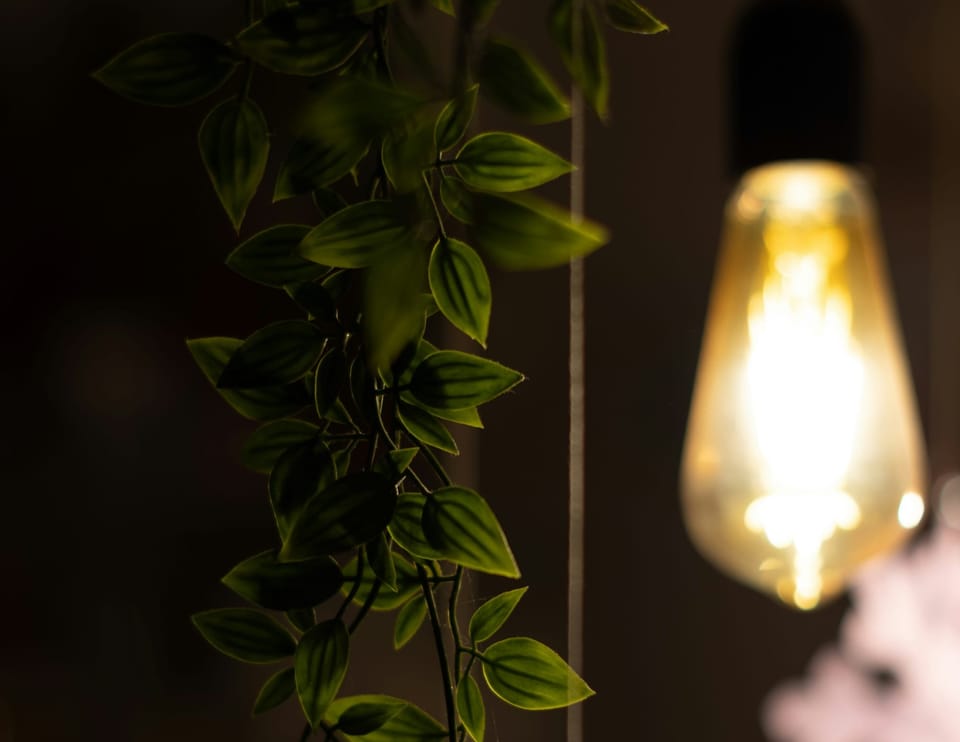
It’s Monday morning, and I’m back at work. My little office is part of a large practice that I share with two older female therapists. I’ve inherited the furniture from the previous inhabitant, an old Gestalt therapist who is now retired. I’m her replacement. She’s left me two cozy arm chairs, a wooden side table and a magical hanging plant covered in twinkle lights. The plant is so long it extends from the ceiling to the floor and then back up to the window and around. It must have taken a long time to grow this plant. Maybe a decade, or two. The twinkle lights are a nice touch. I’ve gotten many compliments for the plant and the lights. It’s one of the first things new clients comment on, during that awkward first session, before the ice is broken and the topics get real.
The woman in front of me is a few years older than me. Mid- or late thirties. It’s always a little bit weird to be a therapist for someone who is older than me. Like I’m supposed to help someone who actually has more life experience than me. Like maybe the roles were supposed to be the other way around. The client, her name is Laney, recently went through a devastating break-up. This is the third session since. The third session of talking almost exclusively about the relationship and it’s sudden end. I’ve run out of useful things to contribute. I’m sort of not an expert on break-ups.
“I just miss him so much sometimes”, she says. I nod. Yeah, that’s to be expected. I can relate. Break-ups suck. My last break-up sucked. Somehow you go from being deeply connected to another person, from thinking that they’re your person, to… not. I’m having some trouble fitting the problem of break-ups into the therapeutic frame we’re working with. Laney continues. “I’m having trouble concentrating at work. Work just doesn’t feel meaningful when there’s nobody to come home to. He used to be my person to come home to.” She’s crying now. Little quiet sobs. I wonder who, or what, has caused her to learn to cry so quietly. “Yeah.” I say, feeling sheepish.
My two main modalities are IFS, short for Internal Family Systems Therapy and an introspection method named Focusing. The client seems pretty in touch with what she’s feeling, so IFS it is. Within the method you get the client to unblend from any part that isn’t their core self. The core self is characterized by curiosity, compassion and a general sense that things are workable. “It sounds like there’s a part of you that really misses your partner and feels like things aren’t going to be okay without him”, I say. She looks at me blankly. Duh Leia, great summary. Now what? I used to love IFS. When my therapist did it with me during our training it was truly the best. Somehow you could go from being stuck in the swamp of your own emotions to experiencing yourself compassionately, curiously and with clarity. Like somehow you were actually a fresh, beautiful being of light that just sometimes forgot itself. Right now I don’t feel like a being of light, and neither does my client. She feels lonely and sad, and at a loss for what to do with her life. And I feel useless.
“Can you ask the part to unblend?” I ask, dutifully following the method. She nods uncertainly. “Yeah. I’m not sure. I sort of don’t know whether it wants to unblend.” “Do you have a sense of being able to talk to it?” “No, not really.” Ah. That’s going to be part of the problem. IFS requires a sort of dialogue between the core self and the parts. You can kind of tell when there’s a connection to the part, a sort of access that’s established. When the connection isn’t working you’re supposed to assume that there’s another part that’s getting in the way. “How do you feel towards the part?” I ask her. “Mad”, she say. “I’m mad that I feel so terrible about losing him. Like, it makes me weak that I want him back, when he clearly doesn’t want me anymore. He’s just decided to throw me away, like an old tissue.” She gestures at the pile of used up tissues next to her. I nod. Maybe now we’re getting somewhere.
“Can you ask the mad part to unblend?” I ask. She nods slowly. “Maybe.” I give her some time. “I’m just so angry”, she says. “He didn’t even give me a chance. Like, he just left, without trying. Aren’t you supposed to try in relationships?” “How do you feel about the angry part?” I prompt. “I don’t know”, she says. “I’m just angry. It just feels like me.” I think for a moment and then decide to follow a hunch. “What would you feel if you weren’t angry?” I ask. She thinks. “I think I’d be hopeless. Like, as long as I’m angry, I don’t have to feel that.” I nod again. That makes sense. “Could you let yourself feel hopeless? What does the hopelessness feel like?” She breathes, and her body sags a little. “I mean, I’m turning forty in less than two years. It seems like everyone else has someone, someone who they belong with. Just not me. Everyone else is married, or getting married. Having babies. Soon it’s going to be just me, and the other leftovers who somehow can’t hack having a relationship.”
I breathe too, trying not to sag. Her hopelessness is contagious. I feel a little bit glad not to be in her shoes. At least I have a few more years, before the biological clock catches up with me. I breathe and glance at the actual clock. Less than five minutes left before the end of the session. “Is there anything you want to say to the hopeless part before we find a stopping point?” I ask. I hate this. I hate leaving her in this state. What’s the point in seeing a therapist, when all they do is make you feel more hopeless? She shrugs. “I want the hopeless part to know that I get it. That it’s not alone.” “That’s good”, I say, a little relieved. That’s maybe the best outcome we were going to get in less than five minutes. “Really let it know that you’re there and that you understand it.” She nods again, a few tears running down her cheeks. “Is now an okay stopping point?” I ask. She nods feebly. It’s not an okay stopping point, and we both know it. “I’ll see you next week.” I say. She plasters a fake little smile onto her face. “Thanks, Leia”, she says, before getting out of her chair and out of my office.


Comments ()