
Focusing, Chapter 1: The Origins of Focusing
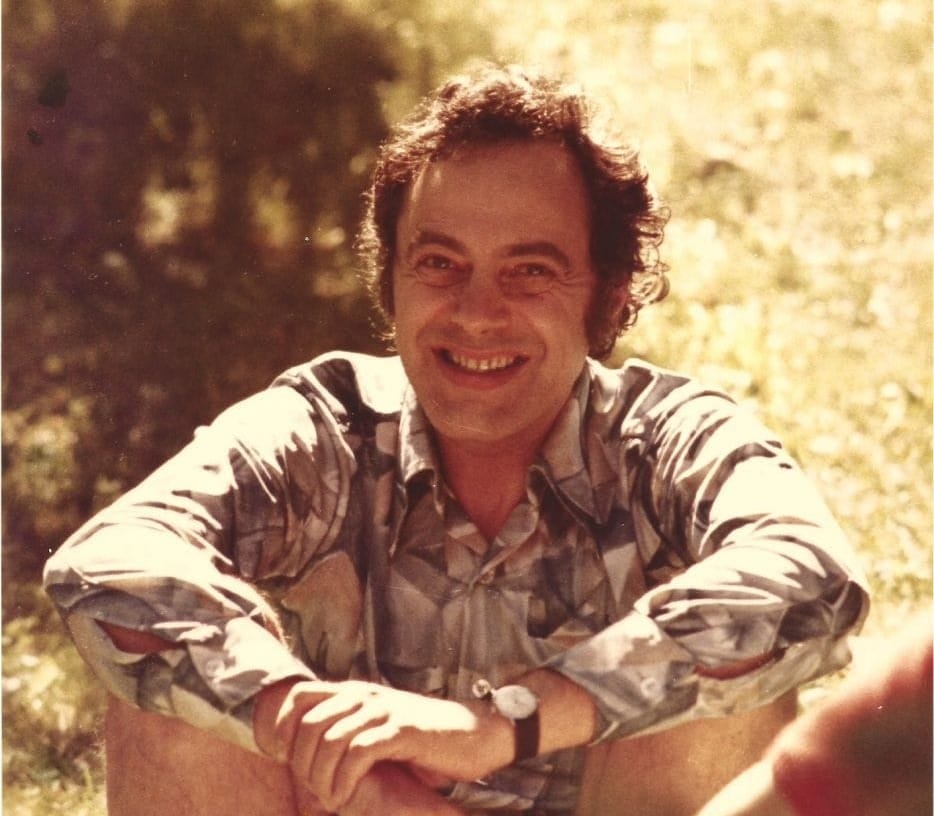
I’m re-reading Eugene Gendlin’s seminal book Focusing, written in 1978. I was initially intending to write a sort of book review, or summary, but I find that I cannot. Gendlin’s writing is already so on point, so deep and insightful, that any attempt at a summary seems like butchery. All I can say is, go read this book. It is truly wonderful, epic, and life-changing.
Seriously, if you haven’t read it yet, you should probably put down this post and get the book. Instead of butchering this beautiful work I’m just going to add my thoughts and responses as I’m going about re-reading the book. If it feels fun to read about me geeking out while reading the book then maybe we can be on the journey together.
So, I’m re-reading the Chapter 1: The Inner Act, where Gendlin talks about the initial research that originated the Focusing method. I think I’m just going to quote him a lot, to avoid the aforementioned butchery. All the quotes are from Chapter 1.
“At the University of Chicago and elsewhere in the past fifteen years, a group of colleagues and I have been studying some questions that most psychotherapists don’t like to ask out loud. Why doesn’t therapy succeed more often? Why does it so often fail to make a real difference in people’s lives? In the rarer cases when it does succeed, what is it that those patients and therapists do? What is it that the majority fail to do?
Seeking answers, we studied many forms of therapy from classical approaches to recent ones. We analyzed literally thousands of therapist–patient sessions recorded on tape. Our series of studies has led to several findings, some very different from what we and most other professional therapists expected.
First, we found that the successful patient—the one who shows real and tangible change on psychological tests and in life—can be picked out fairly easily from recorded therapy sessions. What these rare patients do in their therapy hours is different from the others. The difference is so easy to spot that, once we had defined it, we were able to explain it to inexperienced young undergraduates, and they too were able to sort out the successful patients from the others.
What is this crucial difference? We found that it is not the therapist’s technique—differences in methods of therapy seem to mean surprisingly little. Nor does the difference lie in what the patients talk about. The difference is in how they talk. And that is only an outward sign of the real difference: what the successful patients do inside themselves.”
First of all, note the gentleness, straightforwardness and clarity of his writing. Nothing is extra, every sentence is purposeful and reveals new important information at just the right pace. The sense of intention I get from reading this is truly awe-inspiring. One day I want to be a writer of this caliber! But I digress.
What’s truly inspiring here is Gendlin’s relationship to research. This study, that he describes, is the rare kind of science, driven by good theorizing, that has the potential to change the world. I’ve spent many years in academia and I’ve seen some truly mediocre science in different fields. It can be disheartening to contemplate how much money and person hours we throw at research that doesn’t go anywhere, doesn’t replicate, etc. This study, in its simplicity, seems like a paradigm of how to approach a new field like introspection. It, like, sings.
First, notice that the study is as low-tech and as cheap as can be. Just a tape recorder and thousands of hours of recordings of something that was already happening anyways. No fMRI machines needed to do brain scans, no questionnaires that you have to pay people to come in and fill out, not even a video camera. Just an unobtrusive tape recorder that fades into the background. So simple.
Notice also, that the study uses no math and no unnecessary formalism. It’s purely qualitative, as any early investigation should be. It also makes very few theoretical assumptions about the subject matter. It assumes that therapy is a thing, but doesn’t assume that we know how it works. The only true assumption in it is that we can tell whether therapy worked or not. And that’s exactly the assumption we need to be able to investigate at all.
The study is driven by a clearly articulated and well-formulated question that he starts out by telling us about. What is the difference between therapy that fails and therapy that succeeds? It’s an uncluttered, honest question that gets at the core of what we care about. Its simplicity is the mark of true sophistication. It sounds like the kind of question anyone could come up with (until you actually try to do it, that is), simply because it gets at the core of things. And yet it probably took hundreds of hours to refine.
Thirdly, I appreciate the extra layer of objectivity brought by having the evaluation done by inexperienced undergrads. I know it doesn't quite hit the standard of double blinding, but for such an early, exploratory study it's a nice thing to have.
Observing his intention, I notice I really like the balance Gendlin strikes between having trust in his own subjective ability to find patterns in his subject matter to create theory and the humility with which he switches into outside view and objective checking of his findings. Somewhere in the background vibe you can tell the enormity of the care he has for finding the actual truth of the matter.
Last, and maybe most importantly, notice how big the effect size is:
“One fact that disturbed us the most in those research studies was that patients who did the crucial thing inside themselves could be picked out in the first two therapy sessions. We found we could predict success or failure right from the start just by analyzing the early interviews. According to a careful statistical analysis, there was less than a thousand-to-one chance of getting the same finding accidentally.”
The difference between success and failure is basically black and white, the success property is either there or it isn’t. It’s not a spectrum where we find properties that contribute a percentage to success. And it’s obvious, even to the barely trained eye, early on in the process. This is notably different from the mediocre science stuff where we fish with complicated statistical methods for a 5% improvement along a dimension that may or may not be relevant depending on whether you buy into the implicit theoretical assumptions.
It’s really worth highlighting the height of philosophical sophistication Gendlin is coming from. He was a truly inspiring person. (He died in 2017.) I wish I could have met him.



Comments ()